


Are You Eligible for the National Disability Card?
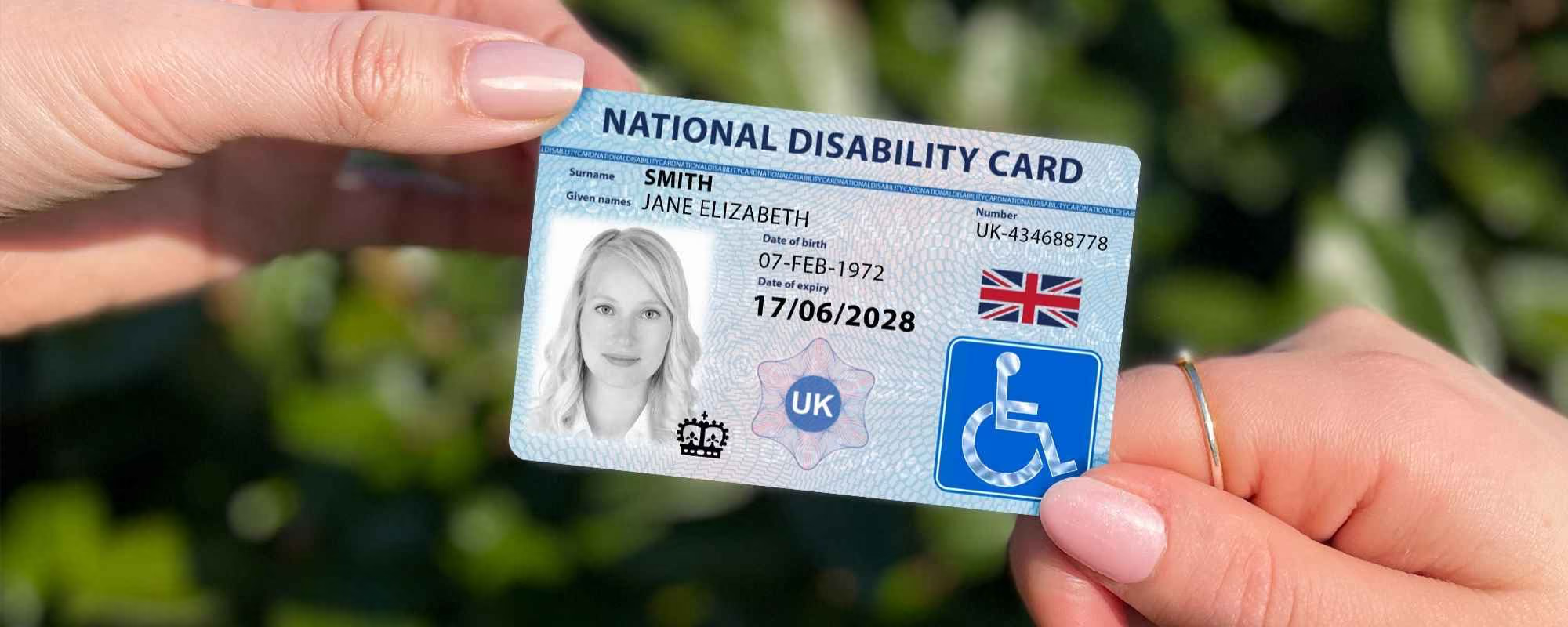
Disability is not always visible, and there is no exhaustive list of conditions that make you eligible for the National Disability Card. You may be eligible whether your disability is physical, mental, sensory, neurodevelopmental or related to a long-term health condition.
Equality Act 2010
The key point is that we use the Equality Act 2010's definition of disability to determine eligibility. The Act defines disability as a physical or mental impairment that has a substantial and long-term negative effect on your ability to carry out normal day-to-day activities.
Who is eligible?
The Equality Act 2010 covers many different types of disability and health condition. You may be eligible if you live with:
· Physical disabilities
This includes a wide range of physical impairments, including limb differences and conditions that affect mobility, strength, coordination or your ability to carry out everyday tasks.
· Mental health conditions
Mental health conditions can also be considered disabilities where they have a substantial and long-term impact on daily life. This may include conditions such as bipolar disorder, as well as other long-term mental health conditions.
· Deafness or hearing loss
You are eligible if you are Deaf or hard of hearing, particularly where your hearing loss has a significant and long-term impact on everyday activities.
· Blindness or visual impairment
The card is also available to people who are blind or partially sighted, as well as those with other long-term visual impairments that substantially affect daily life.
· Hidden disabilities and chronic conditions
Not every disability is immediately visible. You may be eligible if you have a hidden disability or chronic health condition, including conditions such as:
- Crohn's disease
- Diabetes
- COPD
- Fibromyalgia
- Alzheimer's disease
- Epilepsy
Not every chronic condition affects people the same way, so bear in mind that eligibility is based on whether the condition has a substantial and long-term effect on your ability to carry out normal daily activities.
· Neurodevelopmental disabilities and neurodivergence
People with neurodevelopmental disabilities and neurodivergent conditions may also be eligible. This can include autism and ADHD, where the condition affects your day-to-day life substantially over the long term.
· Cancer, HIV or Multiple Sclerosis
All three conditions are named as disabilities in the Equality Act.
· If you have a Blue Badge
If you have a Blue Badge, this can be used as evidence when applying for the National Disability Card.
· If you receive disability benefits
You're eligible if you receive:
- Personal Independence Payment (PIP)
- Disability Living Allowance (DLA)
- Adult Disability Payment (ADP)
- Child Disability Payment (CDP)
Relevant benefit documentation can also be used as evidence for your application.
· If you have a disabled person's travel card or pass
You can also use any of the following as evidence of your disability during your application:
- Disabled person's Railcard
- Disabled person's Bus Pass
- Disabled persons' Freedom Pass
How do I know if I am eligible?
A useful way to think about eligibility is to ask yourself three questions:
1. Do I have a physical or mental impairment - a disability or long-term health condition?
2. Does it have a substantial effect on my ability to do normal day-to-day activities?
3. Has the effect lasted, or is it likely to last, for more than a year?
If the answer is yes, you are eligible for the National Disability Card.
The National Disability Card recognises that disability can affect people in very different ways. Two people with the same diagnosis may have completely different experiences, which is why eligibility is based on the impact of the condition, rather than the diagnosis alone.
Please note that the list in this article is not exhaustive. You may still be eligible if you have another physical or mental impairment that meets the Equality Act 2010 definition of disability.
What evidence do I need to apply?
Applicants are asked to provide one piece of evidence showing that they have a disability.
Examples of accepted documentation include:
- The back of your Blue Badge
- Disabled persons' Freedom Pass
- Disabled persons' Bus Pass
- A letter from your doctor or another relevant medical professional
- A Disability Living Allowance (DLA) decision letter
- A War Pensioners' Mobility Supplement letter
- A Personal Independence Payment (PIP) letter
- Other relevant documentation showing that you are disabled
You do not need to have everything listed; one piece of supporting documentation is normally sufficient.
Still unsure?
If you are unsure whether you qualify, reviewing the Equality Act definition of disability can help you understand whether your condition may meet the eligibility criteria.
For more information about eligibility and the National Disability Card application process, visit the National Disability Card's eligibility FAQ.
You can apply for your National Disability Card here.
Conclusion
Share

.avif)
.avif)